Understanding NFTs in Online Gambling: What They Are and Where They're Headed
June 10, 2026
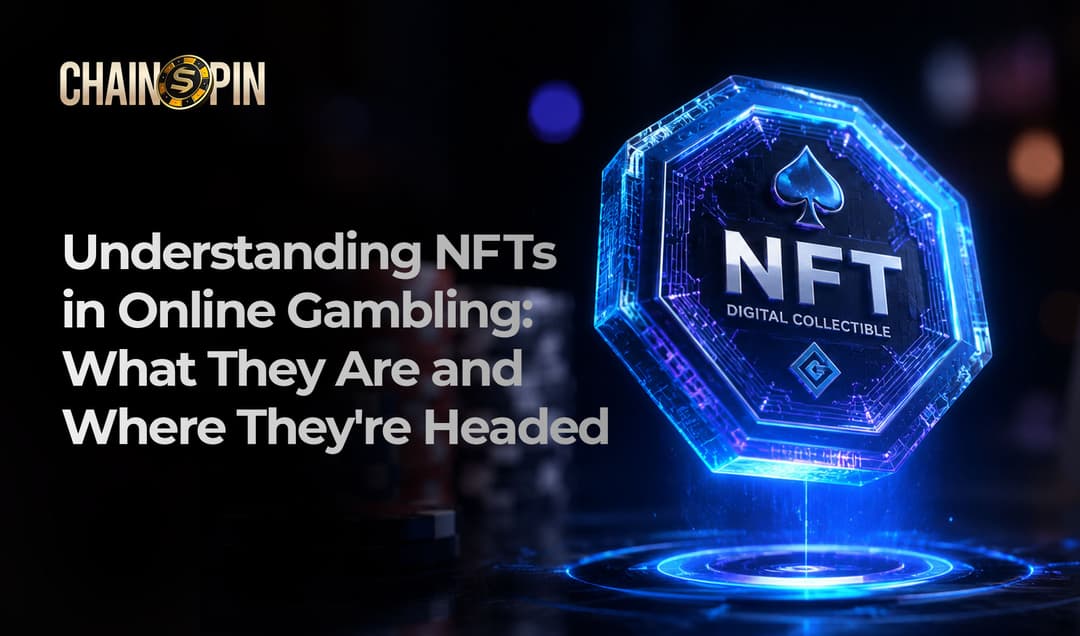
NFT ownership reached an estimated 11.64 million people globally in 2025, and a growing share of that activity is now tied to NFTs in online gambling. The use case has shifted well beyond digital art speculation. Players are holding tokens that unlock VIP rooms, distribute casino revenue, and represent real assets inside blockchain-based games.
That shift matters because it changes the player’s relationship with the platform itself. True on-chain ownership means assets can be held, transferred, or sold independently of any single casino. Traditional loyalty programs cannot offer that.
The following sections break down what crypto casino NFTs actually are, how they work in practice today, and what risks players need to understand before getting involved.
What Is an NFT? A Quick Refresher
An NFT, or non-fungible token, is a unique digital asset recorded on a blockchain. “Non-fungible” means it cannot be swapped one-for-one with another token of the same type. One Bitcoin equals any other Bitcoin. One specific NFT does not equal any other NFT, even within the same collection.
Ownership is verified by the blockchain itself, creating a permanent, public record. No platform can silently revoke or duplicate an NFT held in a self-custody wallet.
Smart contracts govern what the NFT can actually do. These are self-executing pieces of code that define the token’s utility: granting access to a high-roller room, distributing a percentage of platform revenue, or representing a specific item inside a game. The contract runs automatically, without a middleman. This infrastructure is the layer that makes NFT utility in gambling possible, and it is central to how the future of online gambling is being built around blockchain rails.
How NFTs Are Used in Crypto Casinos Today
About 15% of Bitcoin casino platforms had experimented with NFT-based features by 2025. The implementations vary, but four clear models have emerged.
VIP Memberships and Access Passes
Holding a specific NFT can unlock access to high-roller rooms, invitation-only tournaments, or improved cashback rates. Unlike traditional tiered programs, membership travels with the token rather than the account. Transfer or sell the NFT, and the access goes with it. Platforms with structured VIP programs are increasingly tying premium benefits to on-chain holdings rather than cumulative points.
Revenue Sharing
Some platforms issue NFTs that function similarly to fractional shares of the casino’s bankroll. Holders receive a percentage of platform profits, distributed through a smart contract on a fixed schedule. This “be the house” model has attracted serious interest, but it carries meaningful regulatory risk covered in the section below.
Avatars and Digital Identity
Players use verified NFTs as profile images or in-game identifiers. On platforms where community leaderboards carry weight, a rare NFT signals status in a way a username cannot. The identity is also portable, meaning it is not locked to any one platform.
In-Game Assets
NFTs can represent specific items inside blockchain-based games: a particular horse in a virtual racing simulation, a car in a crypto-powered racing game. These assets carry real secondary market value and, on some platforms, can be wagered directly.
NFT Betting and Using NFTs as Collateral
When wagering on an NFT, two players agree on terms, and a smart contract automatically transfers the winning NFT upon resolution. No escrow service, no trust required between parties.
Collateral use is a separate application. High-value NFT collections with established floor prices can be used to secure a crypto loan. That loan funds the player’s bankroll without requiring them to sell the asset. If the wager goes well, the NFT stays in the wallet. If not, the loan still needs to be repaid.
This is a strategy that carries real financial exposure. It is not suited to casual play, and players should factor in both NFT price volatility and borrowing costs before pursuing it.
The Gamification of Gambling
NFTs give casinos a way to close the gap between traditional gambling and video gaming. Players in 2025 are accustomed to progression systems, unlockable rewards, and persistent in-game economies. NFTs bring exactly that structure into a casino context.
A player who hits a specific jackpot threshold, completes a seasonal challenge, or reaches a session milestone can receive a rare NFT as a reward. That token has real market value and can be traded, sold, or used elsewhere. According to DappRadar’s State of Blockchain Gaming Q3 2025 report, gaming NFTs generated $135 million in trading volume in that quarter alone, a figure that reflects genuine demand for blockchain-based game assets rather than speculative froth.
The overlap with Play-to-Earn is real. When gambling activity generates ownable on-chain assets, the line between playing a casino game and participating in an earning ecosystem starts to blur. Tracking crypto gambling trends makes clear that full asset integration, not surface-level gamification, is where the serious platforms are heading.
The Metaverse Casino Experience
Virtual casinos inside metaverse environments like Decentraland and The Sandbox represent the most forward-looking application of NFTs in gambling. Players move through three-dimensional spaces, sit at virtual tables, and wear NFT-based avatars inside the environment.
NFTs serve a structural function here. Owning a parcel of virtual land, which is itself an NFT, is a prerequisite for building a casino within the metaverse. Operators spend real capital on that real estate, then design platforms as persistent 3D experiences rather than browser-based interfaces.
The execution is still early. Most metaverse gambling platforms have far fewer active users than traditional browser-based crypto casinos, and the hardware barrier limits the audience. As device costs fall and headsets become more common, that will change. For now, the metaverse casino is a proof of concept, not a mass-market product.
Risks and Challenges of NFTs in Online Gambling
NFTs in gambling introduce specific risks that go beyond standard crypto volatility. Players should understand all of them before committing capital.

Volatility
NFT floor prices can fall 80 to 90 percent within weeks, as seen repeatedly with major collections since 2021. An NFT used as collateral or held as a casino reward can lose most of its value before a buyer can be found.
Liquidity
Selling a specific NFT requires a willing buyer at the asking price. Unlike converting crypto, there is no instant sale. If you need to liquidate a position quickly, an NFT holding can leave you stuck.
Scams and Rug Pulls
A 2025 multi-state enforcement action against Flamingo Casino Club found that the project had sold revenue-sharing NFTs under false pretenses, promising investors ownership of a metaverse casino being built inside The Sandbox. Regulators in Texas, New Jersey, Wisconsin, Alabama, and Kentucky all acted against the project, which was operated from Moscow and delivered nothing to investors.
Regulatory Scrutiny
The SEC and CFTC issued joint guidance in March 2026 clarifying that most NFTs purchased for enjoyment, including art, music, and in-game items, are not securities. Revenue-sharing NFTs that promise holders a cut of platform profits occupy a different category. Per legal analysis of the 2025 SEC enforcement shift, these tokens may still qualify as securities under existing law if marketed primarily as profit-generating investments. The casino regulation explainer covers how licensing and compliance frameworks apply to crypto platforms more broadly.
As with all forms of gambling, setting clear limits matters. Visit responsible gambling resources if you need support.
Discover NFTs in Online Gambling at Chainspin
The core case for NFTs in gambling holds up on examination. Players gain genuine ownership over in-game assets, transparent revenue participation, and portable status that is not locked to a single platform. These are real improvements over what traditional loyalty programs provide.
The risks are equally real. Volatility, liquidity constraints, scam projects, and regulatory uncertainty are not edge cases. Vetting a platform’s licensing, confirming that smart contracts have been independently audited, and understanding what a revenue-sharing NFT means legally are non-negotiable steps before committing capital.
Platforms that combine provably fair gameplay with transparent tokenomics and genuine on-chain utility represent where this space is heading.
At Chainspin, the $SPIN token connects casino gameplay, sportsbook betting, and staking into a single tokenized ecosystem built around the GambleFi model. Check local regulations before playing, and review terms on any promotional offers before depositing.
Frequently Asked Questions about NFTs in Online Gambling
Can I bet my NFT in a casino?
Some platforms allow direct NFT wagering, where two parties stake their tokens and a smart contract automatically transfers the winning NFT on resolution. Most mainstream crypto casinos still settle in fungible cryptocurrency rather than NFTs directly, but peer-to-peer NFT betting platforms do exist. Availability depends entirely on the platform you are using. Check the supported bet types before assuming NFT wagering is an option.
What is an NFT casino?
An NFT casino is a crypto gambling platform that integrates non-fungible tokens into its ecosystem in some meaningful way: as VIP membership passes, in-game assets, revenue-sharing instruments, or avatar identifiers. The term covers a wide range of implementations.
Some platforms use NFTs purely for cosmetics and branding; others tie real financial utility to them through smart contracts. That distinction matters when evaluating whether a platform’s NFT offering is genuinely useful or just marketing.
How do NFT revenue-sharing casinos work?
Online crypto casino platforms issue NFTs that function similarly to fractional ownership stakes in the casino’s bankroll. Holders receive a percentage of gross gaming revenue, distributed automatically through a smart contract on a set schedule. Payouts depend on the platform’s actual trading volume and the specific terms coded into the contract.
Regulatory status varies by jurisdiction. The SEC has indicated that revenue-sharing NFTs marketed as investments may qualify as securities under existing law. Players should verify a platform’s legal structure before participating.
Are NFTs safe to use for gambling?
NFTs introduce risks beyond standard Bitcoin betting. Price volatility can significantly reduce the value of NFT-based winnings or collateral between the time you earn them and the time you sell. Liquidity is not guaranteed.
Scam projects are common in this space. That said, platforms with audited smart contracts, transparent terms, and recognized gambling licenses represent a meaningfully safer environment. Always confirm licensing status before depositing.
What happens to my NFT if the casino shuts down?
Because NFTs are stored on the blockchain and not on any casino’s central server, platform closure does not automatically erase them from your wallet. Anything held in a self-custody wallet stays there.
However, any utility tied to the NFT will stop functioning if the platform closes: VIP access, revenue distributions, and in-game functionality all depend on the platform continuing to operate. The token persists on-chain. Its utility does not.
Share Article
Tamta Suladze
Tamta Suladze is a senior crypto and iGaming journalist with nearly a decade of experience reporting on blockchain, online gambling, fintech, and emerging technologies. Since 2016, her work has been published in leading outlets including CoinDesk, Investing.com, Bitcoin.com, CoinMarketCap, CryptoNews, and TechBullion.