Understanding Sports Betting Exchanges: How Peer-to-Peer Betting Works
June 10, 2026
Traditional sportsbooks have dominated sports wagering for decades. The house sets the odds, absorbs the risk, and profits from the margin built into every market. For most bettors, this is simply how betting works.
The exchange model flips that structure. Instead of wagering against a bookmaker, you wager directly against other bettors. The platform matches opposing sides of a bet, settles the result, and charges a small commission on net winnings. There is no house edge built into the odds. The operator takes no risk on outcomes.
This article covers how sports betting exchanges work, the mechanics of back and lay betting, how odds form in a peer-to-peer market, and why sharp bettors consistently prefer the exchange model.
The Core Mechanics: Backing vs. Laying
Every bet on an exchange is either a back bet or a lay bet. Understanding the difference is the starting point for everything else.
Back betting is the familiar approach. You back an outcome to happen. Backing Team A to win the Champions League match works exactly like placing a standard bet at a sportsbook. You profit if Team A wins and lose your stake if they don’t. The key difference is that the odds are set by the market, not the operator.
Lay betting is the defining feature of the exchange model. When you lay an outcome, you’re wagering it won’t happen. Laying Team A means you win if they draw or lose. In accepting a lay bet, you fill the bookmaker’s role: you collect the backer’s stake if the outcome fails to occur, and pay out at the agreed odds if it does.
Before placing either type, it’s worth understanding how prices are quoted. Crypto sports betting odds on modern exchange platforms are expressed in decimal format, and the payout math differs from the American moneyline format many US bettors encounter first.
Understanding Liability in Lay Betting
Liability is the most important concept for anyone new to lay betting. It’s the maximum you stand to lose if your lay bet is wrong, and it can be significantly larger than your potential profit.
To calculate liability, multiply the backer’s stake by (decimal odds minus 1). If you lay $100 on a horse at odds of 5.0, your liability is $100 x (5.0 – 1) = $400. You risk $400 to win $100.
That ratio isn’t inherently bad. If the horse has a realistic 15% chance of winning, laying at 5.0 is a sound position. The danger is stacking multiple lay bets across different markets without tracking total exposure. Liability compounds fast. Monitoring your open positions before placing any new lay bet is basic discipline on an exchange.
How Odds Are Formed on an Exchange
Exchange odds aren’t set by a pricing team or a proprietary algorithm. They emerge from the market itself.
When more bettors want to back a selection, demand pushes available odds down. When more want to lay, odds drift higher. The price at any given moment reflects the collective view of everyone active in that market. Heavily traded events produce tight, accurate odds. Niche markets with fewer participants can be less efficient.
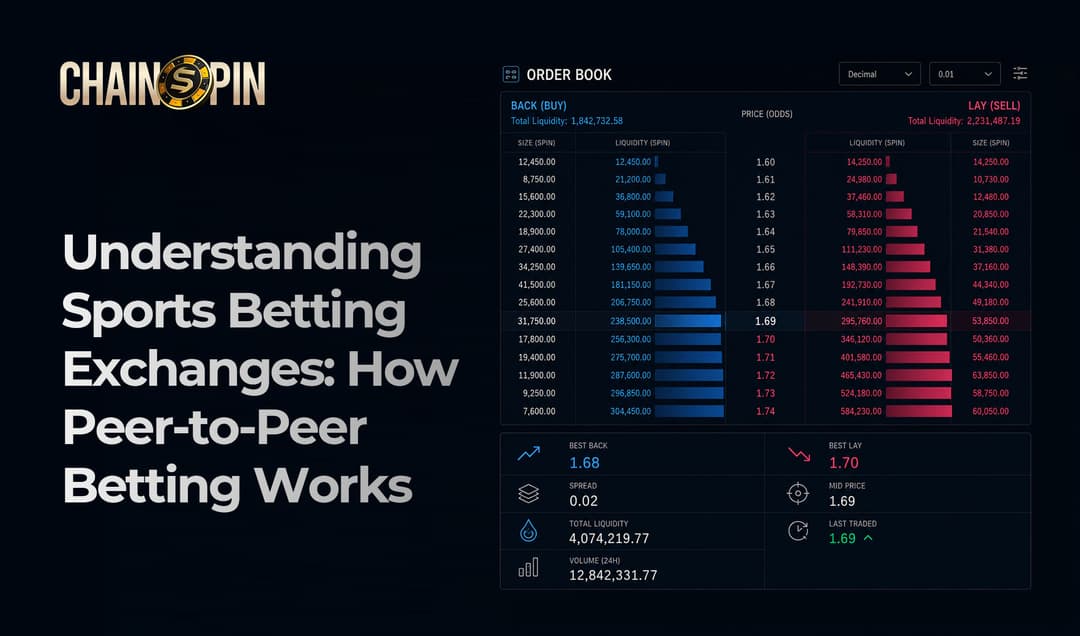
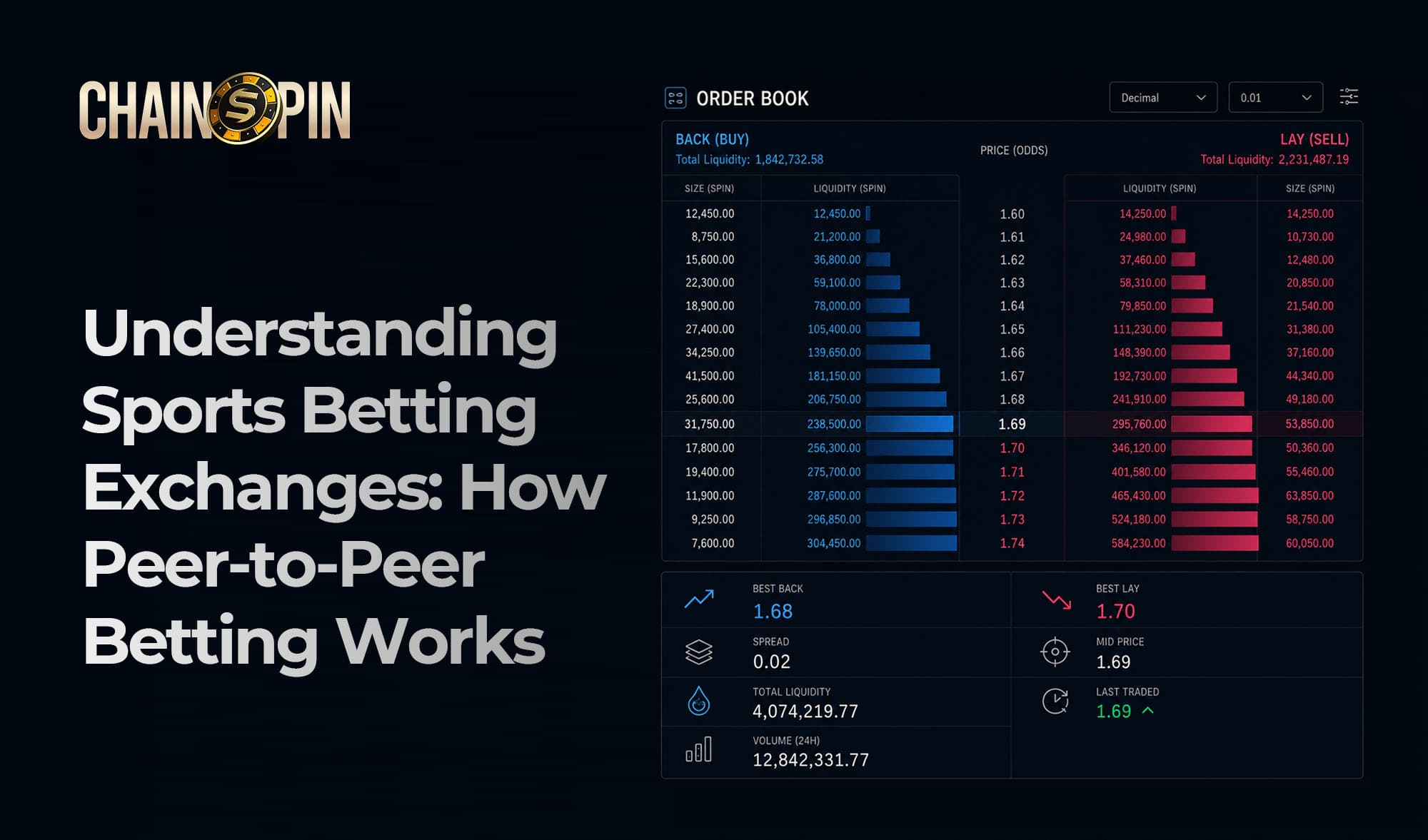
The order book makes this visible. The interface displays two columns: blue for available back odds and the liquidity sitting at each price point, pink for lay odds. When a backer and a layer agree on a price, the platform matches their bets automatically and holds both stakes in escrow until the event resolves.
If no counterparty is available at your requested price, your bet stays unmatched and carries no risk. You can adjust the price, wait for a match, or cancel. This differs fundamentally from a sportsbook, where every bet is accepted instantly against the house.
The Advantages of Betting Exchanges

The most direct advantage is better odds. Traditional bookmakers build an overround into every market to guarantee their margin. A standard bookmaker overround ranges from 110% to 125%, depending on the sport. The effective overround on a high-liquidity exchange market is typically closer to 102–105%, which translates into higher returns for winning bettors over any meaningful volume of bets.
No account restrictions are arguably the more significant draw for serious players. Traditional sportsbooks regularly limit or close accounts of sharp bettors who consistently find value. Exchanges have no incentive to do this. The platform earns commission regardless of who wins, so high-volume winners are commercially valuable, not a liability.
The third advantage is trading. Back bets and lay bets on the same selection can be combined to lock in a profit before an event ends. Back a team at long pre-match odds, then lay them at shorter odds if they take an early lead. The margin between the two positions becomes a guaranteed return regardless of the final score. This is how professional exchange traders operate, and it has no equivalent at any traditional sportsbook.
The Disadvantages and Challenges
Liquidity is the main structural weakness. Exchanges only function when both sides of a bet exist. For the Premier League, the NFL, or major horse racing, finding a match is rarely a problem. For lower-division fixtures, emerging sports, or unusual market types, available liquidity can be too thin to get a bet matched at a fair price.
Commission fees reduce the net value of winning bets in ways that don’t appear with a bookmaker. Betfair, the world’s largest betting exchange, charges a standard 5% on net winnings per market, though this decreases with account activity. Smarkets charges a flat 2%. SX Bet, a blockchain-based decentralized exchange, charges 0% commission on most markets. These rates compound over time and must be factored into any profitability assessment.
The interface itself has a real learning curve. Order books, liability calculations, and the concept of unmatched bets all require more engagement than placing a straight bet at a sportsbook. For bettors placing a handful of casual wagers per week, that complexity may not be worth the improvement in prices.
Crypto Betting Exchanges
Blockchain technology has produced a new category of betting exchange that operates without a central operator. Smart contracts handle bet matching, fund escrow, and settlement automatically. No company holds your funds between placing a bet and receiving your winnings.
Settlement speed is a genuine improvement over centralized platforms. Once a result oracle confirms an outcome, smart contracts release funds to the winning side without manual processing. Access is also borderless: a crypto wallet is the only requirement, which removes the payment rail restrictions that limit access in many regions.
The global sports betting market was valued at approximately $100.9 billion in 2024 and is projected to reach $187.4 billion by 2030 at a compound annual growth rate of 11%, according to Grand View Research. Decentralized and crypto-native exchange models are positioned to capture a meaningful share of that growth as blockchain infrastructure matures.
For anyone already registered at a crypto casino or using a crypto sportsbook for standard sports wagering, the infrastructure overlap is significant. Players coming from a Bitcoin casino background will find that the same wallets and the same deposit and withdrawal flows apply. The primary adjustment is wagering against other users rather than against the house.
Always check local regulations before using any exchange platform, centralized or blockchain-based. Responsible gambling principles apply regardless of the format.
Make the Exchange Model Work for You
The exchange model isn’t suited to every bettor. Someone placing two casual wagers per week on their local team will likely find the commission, order book, and liability calculations more friction than the odds improvement justifies.
For bettors who approach wagering with analysis and discipline, the case is different. Better market prices, no account restrictions, and the ability to trade positions before settlement create advantages that compound over hundreds of bets. Crypto spread betting is another market structure worth understanding alongside exchanges, since both give bettors more price control than a standard sportsbook allows.
If you want to explore crypto-powered sports betting with fast payouts and a wide range of markets, join Chainspin.
Frequently Asked Questions about Sports Betting Exchanges
What is the difference between a sportsbook and a betting exchange?
A traditional sportsbook sets the odds and takes the opposite side of every bet. The house earns from the margin built into the prices, regardless of whether you win or lose. A betting exchange matches bettors against each other.
The operator takes no risk on outcomes and earns revenue from commission on net winnings. This structural difference is why exchanges offer better odds: there’s no vig embedded in the price.
What does it mean to “lay” a bet?
Laying a bet means wagering that an outcome won’t happen. If you lay a team to win, you’re taking the bookmaker’s position: you collect the backer’s stake if the team fails to win, and pay out at the agreed odds if they do.
The key number is your liability, calculated as (decimal odds – 1) x the backer’s stake. That’s the maximum you can lose on a single lay bet, and it’s essential to know this figure before placing.
How do betting exchanges make money?
Exchanges charge commission on net winnings per market. Rates vary by platform: Betfair charges a standard 5% (reducible for high-activity accounts), Smarkets charges 2%, and decentralized blockchain platforms like SX Bet charge 0% on most markets. Commission applies only to net profits in a given market, so losing bettors pay nothing.
What happens if my bet is unmatched?
An unmatched bet sits in the order book and carries no risk. If no one takes the opposite side at your requested price, you can adjust the price to attract a match, leave it open and wait, or cancel the bet entirely. Nothing is settled until the bet finds a match. This is a fundamental difference from a sportsbook, which accepts every bet immediately against the house.
Are the odds really better on an exchange?
For high-liquidity events, yes. Traditional bookmakers operate with overrounds of 110–125%. Major exchange markets typically run at 102–105% overround.
After subtracting commission, the net return is usually still higher than what a bookmaker offers at the same odds. The advantage narrows for low-liquidity markets where fewer participants are active, and for very small stakes where the complexity of the interface outweighs the price benefit.
Share Article
Liam Quinlan-Stamp
Liam is a highly experienced digital marketer, having amassed 10 years experience working with some of the world's leading brands including Barclays, American Express, Binance, Exodus and Cloudbet. He has contributed content to Fox Business, Forbes and other major Tier 1 media outlets — and is a major player/punter within Polymarket prediction markets.