What Is Tilt in Gambling and How Do You Recover From It?
June 10, 2026
What Is Tilt in Gambling and How Do You Recover From It?
The term “tilt” didn’t start in a casino. It came from pinball machines, where hitting the cabinet too hard would freeze the game and flash a single word: TILT. The player had let frustration override control, and the machine punished them for it. The gambling world borrowed the term because the outcome is the same.
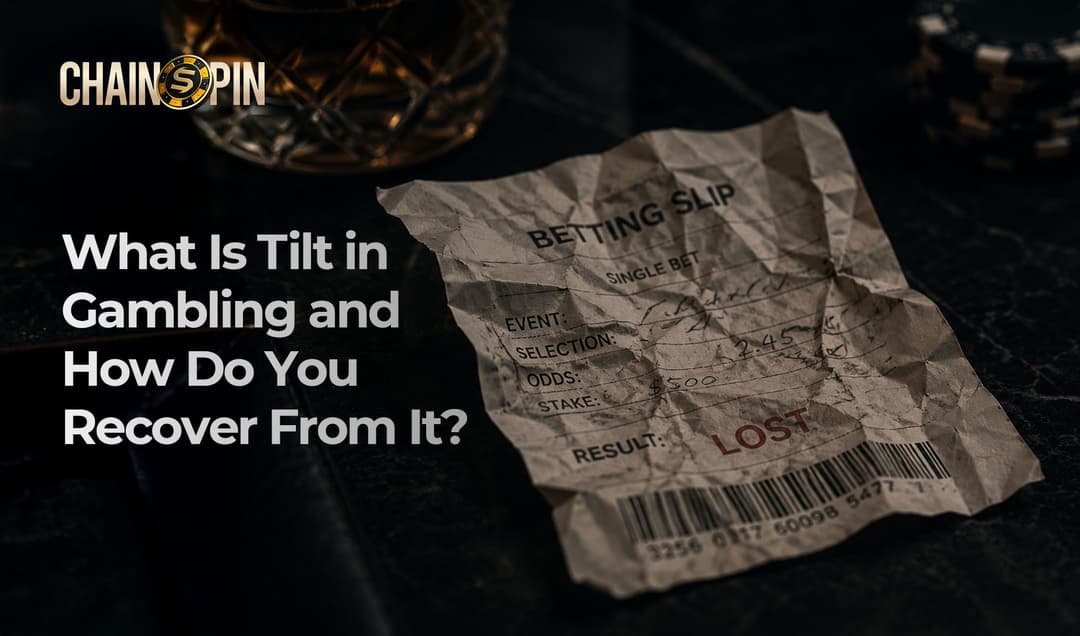
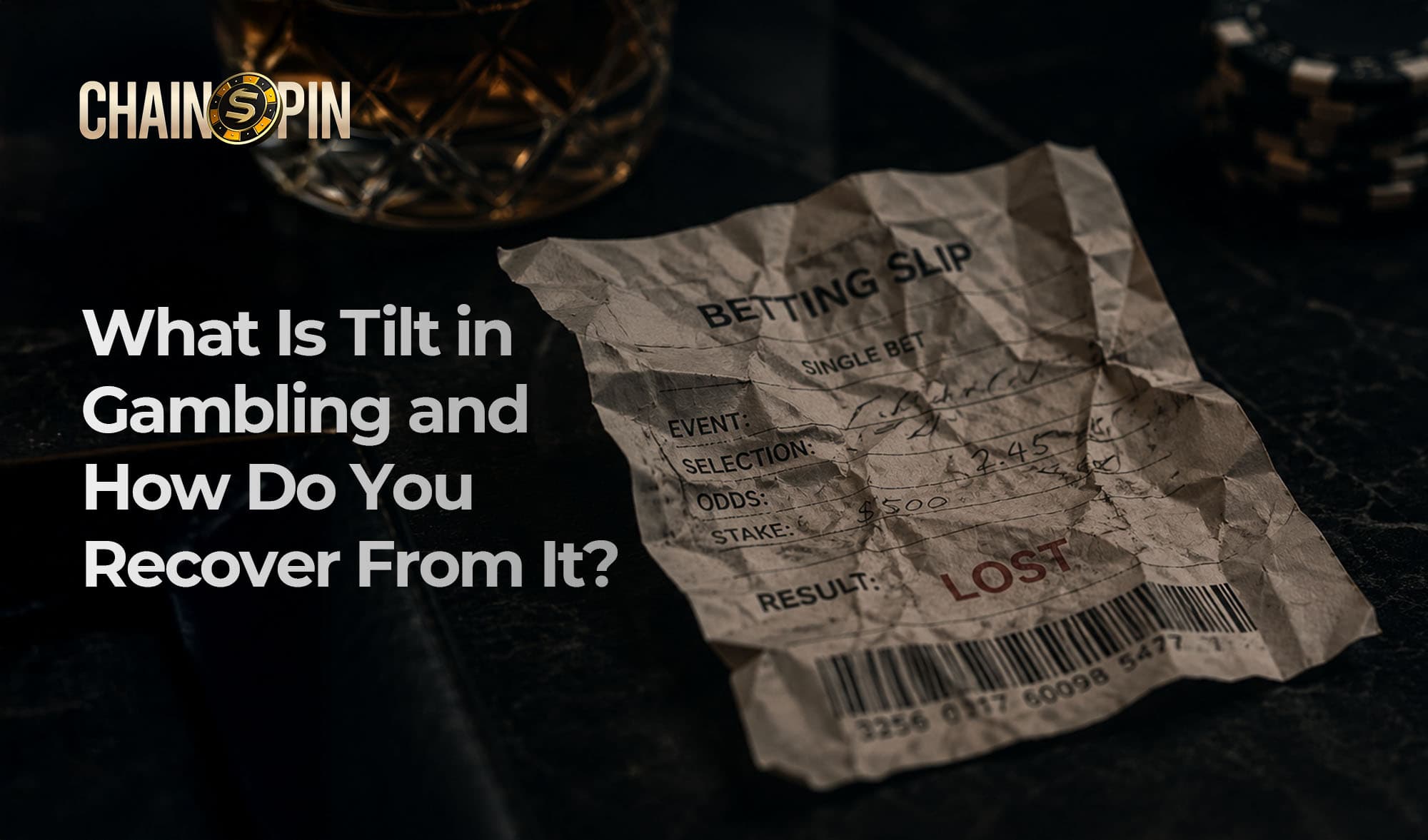
Tilt in gambling is the state where emotional frustration overrides rational judgment. Bettors abandon their strategy, ignore bankroll limits, and make increasingly reckless decisions in an attempt to recover losses. It happens to experienced and casual bettors alike, and it is one of the most financially damaging patterns in gambling.
This article explains what triggers gambling tilt, how to recognize it early, and the strategies that work to manage and prevent it.
What Actually Happens in Your Brain When You Go on Tilt?
Tilt is not just a mood. It’s a neurological shift.
When a bettor suffers a significant loss, the brain processes it as a threat. The amygdala, the brain’s emotional processing center, activates a stress response within milliseconds. This triggers what psychologists call an “amygdala hijack,” where the emotional brain overrides the prefrontal cortex — the region responsible for logical reasoning, risk evaluation, and long-term planning.
Research published in the Journal of Neuroscience showed that amygdala activity directly impairs advantageous decision-making under emotionally charged conditions. In practical terms: a bettor in the grip of this response is no longer calculating odds. They are reacting to distress.
Two cognitive biases amplify the damage. The sunk cost fallacy convinces the brain that past losses justify continued gambling (“I’ve already lost $300; I need to win it back”). The gambler’s fallacy adds the belief that a win is “due” after a losing streak. Neither holds up mathematically, but both feel completely rational during a tilt state.
Building a disciplined approach starts with understanding sports betting fundamentals and how emotional state affects long-term edge.
What Triggers Tilt?
Tilt has a few well-defined entry points. Recognizing them in advance makes them easier to catch before they take hold.
The bad beat is the most visceral trigger. A last-second play that shifts the final score, a stoppage-time goal that flips an over/under, a garbage-time conversion that kills a point spread — these outcomes feel disproportionately unfair because they often involve events with no bearing on the game itself.
For bettors who use spread markets, understanding how crypto spread betting works helps reframe those moments as expected variance rather than personal injustice.
Losing streaks operate differently. No single moment is catastrophic, but confidence erodes over days or weeks. After enough consecutive losing sessions, bettors often start questioning strategies that were actually working, and make impulsive changes that introduce new problems.
Near misses carry a disproportionate emotional charge. Missing a five-leg parlay on the last leg, with a $1,000 payout just out of reach, consistently produces a stronger emotional reaction than missing it entirely.
Near misses are especially acute in bitcoin slots, where the visual proximity of a jackpot symbol triggers the same neural reward response as a win, even though the outcome was a loss. Behavioral research confirms that near misses activate the same reward pathways as actual wins, creating an intense pull to try again immediately.
External stressors lower the tilt threshold before the first bet is placed. Sleep deprivation, alcohol, financial anxiety, and work pressure all reduce the prefrontal cortex’s ability to regulate the amygdala’s stress output. A bettor who is tired and anxious before opening the app is already operating with compromised emotional resilience.
How Do You Know You’re on Tilt?
The difficult part is that tilt rarely feels like tilt from the inside. Most bettors in the grip of it believe they are making considered decisions.
Behavioral signs are the clearest indicators. Drastically increasing bet sizes compared to normal stakes. Placing bets on sports or markets you never normally touch, or jumping into a bitcoin casino game at stakes well above your usual level. Redepositing funds immediately after a session ends. Making multiple rapid bets with no analysis between them. Any one of these is a flag; two or more together mean tilt is already active.
Emotional signs center on a specific flavor of frustration, one that feels personal rather than analytical. “I can’t catch a break” is tilt. “The game is rigged against me” is tilt. So is the opposite: a sudden apathy toward money (“I don’t care if I lose the rest”). That feeling of not caring is not calm. It’s the brain numbing out from sustained financial stress.
Physical signs are worth paying attention to. An elevated heart rate, jaw or shoulder tension, and difficulty sitting still are all indicators that the nervous system is in a heightened state. The body signals what the mind hasn’t fully admitted yet.
The Chainspin Academy covers betting psychology and strategy for players looking to build better habits around managing losses.
Why Is Chasing Losses So Dangerous?
Chasing losses is tilt in its most financially destructive form. If a bankroll drops by 50%, recovering to even requires a 100% return on whatever remains. That kind of gain requires either a genuine edge applied consistently over many bets, or reckless oversizing that puts the remaining funds at serious risk. Emotional bettors tend toward the latter.
Research published in the Journal of Gambling Studies found that loss-chasing appears in over 82% of clinical gambling disorder cases. A separate study by the Siena College Research Institute found that 53% of online sports bettors report chasing losses, a figure that rises to 61% among bettors aged 18 to 34.
A session that ends down $100 is recoverable. A session where someone chases until the account is empty, which takes a surprisingly small number of elevated-stakes bets, is a different problem entirely.
Setting hard limits before this scenario arises is exactly what responsible gambling tools are designed for: deposit caps, session timeouts, and cooling-off periods that are far more effective when configured in advance, during a calm state.
How Do You Stop Tilt in the Moment?
The most effective in-the-moment intervention is also the one most bettors resist.
Walk away. Not after one more bet, not after a “recovery” bet. Immediately. The urge to stay and win it back is the symptom presenting itself. Recognizing it and choosing not to act on it is the first real decision made from outside of tilt.
Apply a 24-hour rule. After any session involving a significant loss or a bad beat, place no bets for the following 24 hours. The acute emotional response to a hard loss fades substantially within that window. Bets placed in the first hour after a significant loss carry the highest emotional load and the lowest analytical quality.
Set a stop-loss figure before each session starts. A predetermined dollar amount at which the session ends, decided in a calm state, before the first bet, removes that decision from a moment of emotional pressure. Bettors who understand how betting odds and expected value work are better positioned to define those limits in terms of real probability outcomes, not just round numbers.
Games that reward strategic discipline, like crypto blackjack, are particularly unforgiving when played on tilt — the edge collapses the moment emotional bet sizing replaces basic strategy.
One practical technique worth knowing is tactical breathing. Inhale for four seconds, hold for four, exhale for four, hold for four. One minute of this reduces cortisol and partially re-engages the prefrontal cortex. It is used by military personnel and high-stakes traders because it works.
How Do You Prevent Tilt Long-Term?

The best approach to tilt is structural prevention, not crisis management.
Flat betting removes emotion from bet sizing. Committing to 1–2% of total bankroll per bet, regardless of confidence level or recent results, means no single loss can cascade into a financial emergency through oversizing. The feeling of “this one is a sure thing, I should bet more” is precisely the impulse that flat betting is built to neutralize.
Accepting variance is the mindset shift that separates disciplined bettors from those who self-destruct during runs of bad luck. A system running at 55% accuracy will still produce losing streaks of six or seven consecutive bets through normal mathematical probability. That is not evidence the system is broken. Treating losses as data points rather than personal failures removes most of the emotional charge that leads to tilt.
Process over results is the professional standard. The question after any bet is not “did it win?” but “was it the right bet based on what I knew at the time?” A well-researched wager that loses to a late fluke is still a good bet. A panic-driven chase bet that accidentally wins is still a bad bet. Judging decisions by the quality of the reasoning, not the outcome, is the only framework that holds up across hundreds of bets.
Players using Chainspin’s crypto sportsbook have access to live markets across football, basketball, tennis, and more. The edge over time comes from the decisions made before and after each bet, not just the bets themselves.
Bet With Your Head, Not Your Emotions
Tilt will happen. The neurological response to loss is involuntary. No amount of experience makes a bad beat feel fine. What changes with discipline is what comes next.
Set your limits before they’re needed. Decide right now what your walk-away rule is: three consecutive losses, a specific dollar figure, or any moment where the decision to keep betting feels emotional rather than analytical. A rule set in a calm moment is the only rule that holds in a heated one.
Chainspin gives players the structure to bet on their own terms: responsible gambling tools, instant crypto payouts, crypto roulette, live dealer tables, and a full sportsbook available in eligible jurisdictions. Gambling is a marathon. A single session is noise. Your decisions across hundreds of bets are the only signal that matters.
Frequently Asked Questions about Tilt in Gambling
What does it mean to go on tilt in gambling?
Going on tilt means entering an emotional state where frustration from a loss overrides rational judgment. It typically follows a bad beat, a prolonged losing streak, or a near miss.
When on tilt, decision-making shifts from analytical to reactive: bettors may increase bet sizes, abandon their strategy, or chase losses in ways they would never consider during a calm session. Recognizing tilt early, before acting on it, is the difference between a recoverable bad session and a serious financial loss.
How do I stop chasing my losses?
The most reliable method is a pre-committed stop-loss rule. Before each session, decide the maximum you are willing to lose and treat ending the session at that point as automatic, not negotiable.
If you are already mid-chase, the fastest intervention is physically leaving: close the app, step away from the screen, and wait at least 24 hours before placing another bet. Most reputable platforms also offer deposit limits and cooling-off tools that enforce this automatically when configured in advance.
Why do I get so angry when I lose a bet?
Because the brain treats financial loss as a genuine threat. The amygdala activates a stress response to monetary loss much as it would respond to a physical danger, temporarily overriding the logical centers of the brain. This is a documented neurological reaction, not a character weakness. The anger is a signal that the amygdala has taken over from the prefrontal cortex. Knowing this won’t eliminate the feeling, but it creates a moment of recognition that can prevent the reactive decisions that typically follow.
What is a bad beat in sports betting?
A bad beat is a loss caused by a late, unpredictable event that overturns what appeared to be a winning bet, such as a meaningless last-second touchdown that pushes a score past the point spread, or a stoppage-time goal that flips an over/under result.
Bad beats are particularly tilting because the original analysis was sound; the outcome was simply bad luck. That sense of injustice is one of the most reliable tilt triggers in sports betting.
How long should I take a break after a bad loss?
A minimum of 24 hours is the guideline most betting professionals recommend. The acute emotional response to a significant loss (elevated stress hormones, reduced prefrontal activity) fades substantially within that window. Some bad beats or streaks warrant longer breaks of two or three days, followed by a calm review of the session before returning.
The point is not the specific duration but returning only when the decision to bet feels analytical again, not like something that needs to happen to relieve emotional distress.
Share Article
Liam Quinlan-Stamp
Liam is a highly experienced digital marketer, having amassed 10 years experience working with some of the world's leading brands including Barclays, American Express, Binance, Exodus and Cloudbet. He has contributed content to Fox Business, Forbes and other major Tier 1 media outlets — and is a major player/punter within Polymarket prediction markets.