What Is a Sportsbook Liquidity and Why Does It Matter for Bettors?
June 10, 2026
The global sports betting market reached $100.9 billion in 2024, according to Grand View Research, and is projected to hit $187.39 billion by 2030. Not all of that market is equally accessible to every bettor.
A casual fan placing $20 on a weekend Premier League fixture will never notice liquidity constraints. A serious bettor trying to get $5,000 down on a third-division soccer match will run straight into them.
Liquidity is the invisible ceiling most bettors don’t see until they hit it. It determines whether your bet gets accepted at the size you want, whether the odds reflect fair value, and whether cash-out prices are worth taking.
This article breaks down what sportsbook liquidity is, what drives it, and what it means for your betting experience, whether you use a traditional book or a crypto sportsbook.
Defining Sportsbook Liquidity
Liquidity in a sportsbook context is the depth of a market. Specifically, it’s how much money a bookmaker is willing to risk on a given outcome at the current price. Think of it as the operator’s capacity to absorb bets without having to move the line.
In financial markets, a liquid asset is one you can trade quickly without taking a hit on price. The same logic applies here. A liquid betting market absorbs large wagers with minimal price movement. An illiquid one can’t.
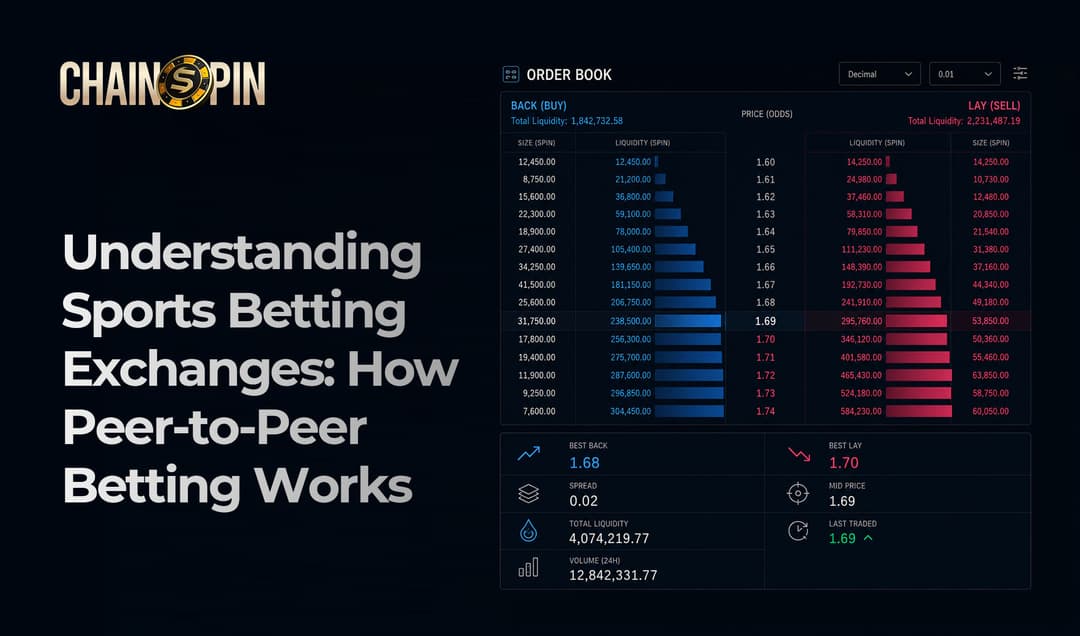
Betting exchanges make the order-book version of this most visible. On an exchange, every bet requires a counterparty — someone willing to take the other side. The volume of unmatched bets waiting to be accepted at a given price is the market’s liquidity. No counterparty, no bet.
Traditional sportsbooks work differently. The bookmaker acts as the sole counterparty, sets its own limits, and effectively creates liquidity from its own bankroll. The deeper those pockets and the more confident the operator is in its risk models, the higher the limits it can offer.
Why Liquidity Matters to the Bettor
Getting money down is the most direct impact. Low liquidity means low maximum bet limits. If you want to wager $2,000 on a match and the book caps stakes at $200, you either split the bet across multiple platforms or leave money on the table.
Price stability is the second factor. A highly liquid market absorbs a large bet without the odds shifting. In a thin market, a single significant wager can move the line immediately, which is especially punishing when you’re trying to place multiple bets at the same price.
The vig (the book’s margin) tells the third part of the story. The American Gaming Association reported that Americans wagered $1.39 billion legally on Super Bowl LIX in 2025. That volume gives books the confidence to price the game with tight margins, sometimes as low as 2 to 3%. Compare that to a low-profile fixture where a book might hold a 10 to 15% margin just to offset the risk of pricing incorrectly on limited information. Less liquidity, higher vig, worse odds for you. Understanding how sports betting odds and payouts actually work helps you recognize when a margin is genuinely competitive.
Cash-out options depend on liquidity, too. Fair cash-out values require the sportsbook to reprice your bet in real time based on current market conditions. In thin markets, that pricing can be unreliable, and books respond by either withdrawing cash-out entirely or offering poor values.
Factors That Affect Liquidity
Several variables determine how liquid any given betting market will be.
Sport and event popularity is the biggest driver. NFL, Premier League, NBA, and Champions League markets attract massive global betting volume. A table tennis match from a regional league might see only a few thousand dollars in total action. The difference in available liquidity between those two scenarios is enormous.
Time to event matters considerably. Lines typically open with tighter limits — the book is still gathering information and doesn’t want exposure to sharp bettors who know more than the opening price reflects. As the event approaches, more public money enters, limits rise, and liquidity deepens. The sharpest pricing on any event is usually available in the hours just before kick-off.
Bet type creates a clear hierarchy. Main markets — moneyline, spread, and totals — carry the highest liquidity. Player props and exotic markets are priced with much thinner books. A $10,000 bet on the moneyline of a major fixture is routine. The same stake on a player’s total assists in a lower-priority game will almost certainly get rejected or heavily clipped.
| Market Type | Typical Liquidity | Typical Vig |
|---|---|---|
| Major moneylines (NFL, EPL, NBA) | Very High | 2–5% |
| Totals and spreads (major leagues) | High | 4–6% |
| Lower-league match result | Medium-Low | 7–12% |
| Player props and exotics | Low | 10–15%+ |
| Niche sports (regional leagues) | Very Low | 12–20%+ |
The sportsbook’s size and infrastructure complete the picture. Larger, established operators run sophisticated risk models and hold significant reserve capital, giving them the ability to offer high limits across many markets. Newer or smaller platforms compensate with tighter limits and wider margins.
Liquidity in Traditional Sportsbooks vs. Betting Exchanges
Traditional sportsbooks and betting exchanges supply liquidity in fundamentally different ways.

A traditional sportsbook acts as the market maker. It sets the odds, accepts bets from all sides, and manages its exposure by moving lines when one outcome takes disproportionate action. When heavy money lands on one side, the price shortens to attract action on the other side and rebalance the book. The liquidity exists because the operator itself is willing to take positions up to its stated limits.
A betting exchange operates peer-to-peer. Liquidity comes entirely from other users — those willing to lay an outcome are matched against those wanting to back it. This means the market can be extremely efficient when volume is high. But if interest is thin, there’s no mechanism to manufacture the other side of your bet. The market simply doesn’t exist at a useful price.
For high-volume events, exchanges often offer sharper odds because their commission model is leaner than a traditional vig. For niche events, a traditional sportsbook can paradoxically be the better option, since the operator is at least willing to take a position. On an exchange with no active counterparties, you have nothing.
Liquidity in Crypto Sportsbooks
BTC sportsbook sources liquidity through two main models, and understanding the difference helps set realistic expectations.
Most centralized online crypto sportsbook platforms operate on B2B white-label infrastructure. Providers such as BetConstruct, BetBy, and SportsRadar supply the odds feeds, market coverage, and pre-match and live pricing that the platform runs on.
In this model, the sportsbook is effectively licensing access to a professionally managed odds layer. Liquidity levels are comparable to mid-tier traditional books. The key distinction is that these platforms accept wagers and pay out winnings to players who deposit with Bitcoin, Ethereum, and a range of other major tokens rather than fiat.
Decentralized platforms take a different approach. Protocols like Azuro use a virtual automated market maker (vAMM) with on-chain liquidity pools, where anyone can contribute capital and earn from betting volume. BetDEX on Solana runs as a decentralized exchange where bettors are matched peer-to-peer through the Monaco Protocol.
These models offer transparency and permissionless access, but liquidity depth varies based on how much capital has been deposited into the pool at any given time.
One genuine challenge for crypto books is volatility. If a platform holds its liquidity reserves in a volatile asset and that asset drops sharply, the fiat equivalent of available liquidity can shrink overnight. Stablecoin-denominated pools address this directly, which is why USDT and USDC have become the backbone of many bitcoin betting platforms.
The global reach advantage is real. Without the banking restrictions that block fiat platforms from operating in dozens of markets, crypto sports betting platforms can aggregate a worldwide user base, spreading risk and deepening liquidity across markets.
How to Navigate Low Liquidity Markets
Thin markets are a reality, but they can be managed.
Time your bets. If you’re hitting the maximum stake limit when a line opens early in the week, wait. Most books raise limits significantly in the 24 hours before an event as market confidence grows and public money enters.
Line shop across multiple sportsbooks. Rather than trying to get a large single wager accepted at one book, split it across two or three platforms. This spreads the operator’s risk, increases the chance of full acceptance, and can improve your average price across the total stake.
Understand the line movement risk. If you bet heavily into a thin market, your wager itself moves the line. Every subsequent bet you try to place at that market is now at a worse number. Sharp bettors are acutely aware of this — moving your own line is a fast way to eliminate the value that made the bet worth placing.
For bettors who regularly seek higher limits, a dedicated VIP and high roller program is worth looking into. These products are built for bettors who want no-limit access and a risk management team that handles large positions rather than auto-rejecting them.
As with any form of gambling, responsible betting means knowing your own limits alongside the market’s. Chasing volume in illiquid markets compounds both financial and behavioral risk.
Make Liquidity Work in Your Favor
Liquidity shapes the entire betting experience. It determines whether your stake gets matched at the size you want, what margin you’re paying, how stable the price is, and whether cash-out is a viable tool. The best markets offer something close to fair pricing because the volume on both sides forces efficiency. Thin markets benefit the operator, not you.
Recognizing that difference before placing a bet is what separates informed bettors from the average recreational player. Deep markets, competitive odds, and high limits come from platforms with the infrastructure and capital to back them.
If you want to access competitive odds across football, basketball, tennis, and thousands of other markets, get started at Chainspin — built for fast crypto payouts, no caps on winnings, and a sportsbook designed to handle serious stakes. Always check local regulations before registering to confirm availability in your jurisdiction.
Frequently Asked Questions about Sportsbook Liquidity
What does it mean when a betting market is illiquid?
An illiquid betting market has low volume — very little money has been wagered on the available outcomes. This typically results in lower maximum bet limits, wider margins, and more volatile odds.
A single large bet can shift the price significantly in an illiquid market. Niche sports, lower-league events, and obscure prop bets are the most common examples. Illiquid markets aren’t necessarily bad. They occasionally contain mispriced odds, but the ability to exploit those prices is constrained by the limits the book is willing to accept.
Why do sportsbooks limit how much I can bet?
Bet limits reflect the sportsbook’s exposure risk at the current price. If a market has low liquidity, either because it’s a niche event or because the operator lacks the capital to hold large positions, the book sets a lower limit to prevent any single wager from creating an unmanageable liability.
Sharp bettors who consistently win can also face individual account limits unrelated to market liquidity, since the operator is managing its overall risk profile against that specific player’s track record.
Does high liquidity mean better odds?
Generally, yes. Highly liquid markets attract enough volume that sportsbooks compete on price and can afford to run tighter margins.
An NFL game or a Champions League final will typically carry a 4 to 6% vig, while a low-profile fixture can see margins double that or more. The relationship isn’t guaranteed, but markets with greater liquidity are where the most competitive pricing reliably emerges.
Why is liquidity higher right before a game starts?
As an event approaches, more information becomes available — injury news, team selection, public betting patterns — and more bettors enter the market.
This increased volume gives sportsbooks greater confidence in their pricing, which allows them to raise limits and accept larger stakes. Lines that open mid-week cautiously are often at their deepest and most liquid in the final few hours before kick-off.
How does liquidity work on a betting exchange?
On a betting exchange, liquidity is provided by users rather than the platform. Bettors wanting to back an outcome are matched against users willing to lay (bet against) that outcome. The total volume of unmatched bets at various prices is the market’s liquidity.
In major events, exchanges can be extremely liquid and offer sharp prices with low commission. In smaller events, if no one is willing to lay your desired price, the bet simply can’t be placed. Exchanges charge commission on winnings rather than building margin into the odds, which makes them highly efficient for liquid markets but potentially empty for niche ones.
Share Article
Liam Quinlan-Stamp
Liam is a highly experienced digital marketer, having amassed 10 years experience working with some of the world's leading brands including Barclays, American Express, Binance, Exodus and Cloudbet. He has contributed content to Fox Business, Forbes and other major Tier 1 media outlets — and is a major player/punter within Polymarket prediction markets.